The eggplant and snap peas are dying. In the same small garden bed the zucchini, bell peppers, basil and dill are all looking okay. I guess. Some better than others and I 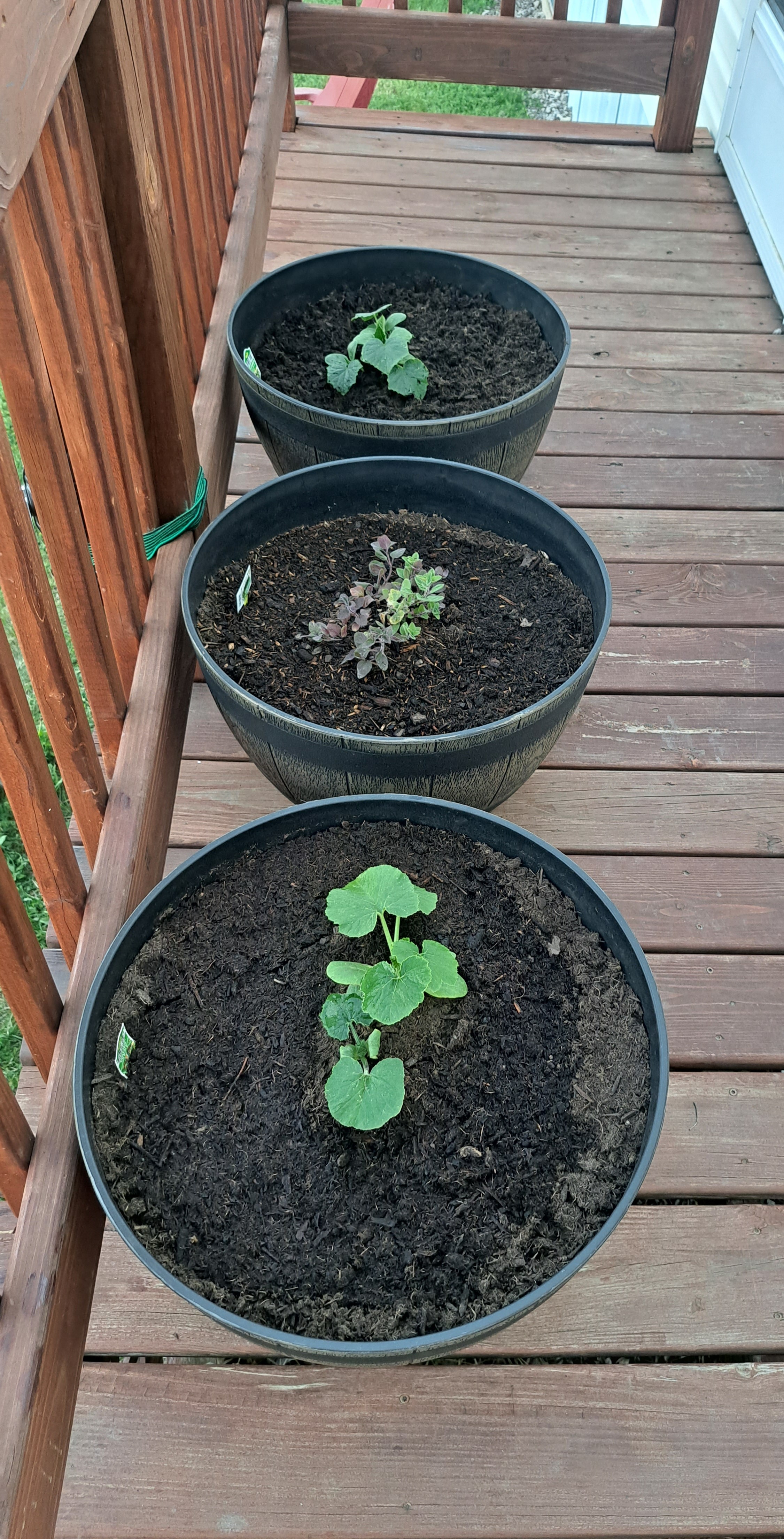 don't know how their growth compares with those in other gardens but since they are green and don't look like they are dying then as far as I can tell they are alright. The zucchini seems to be growing well but the leaves are a bit beat-up, unlike its brethren zucchini that I transplanted from the garden bed to its own container on the porch deck after I learned that I needed a lot more space in the garden to accommodate all the plants. That second zucchini plant is really looking good despite – or maybe because of – the small fake plastic half barrel I put it in that probably leaches toxic chemicals into the soil. Well, the three half barrels I bought were cheap and I needed the space after overcrowding the garden so the plants needed to go somewhere. We are constantly dreaming that 'when we get on our property' we will do things right and proper but in the meantime we decided that this year we needed to do something and not just keep making excuses not to grow.
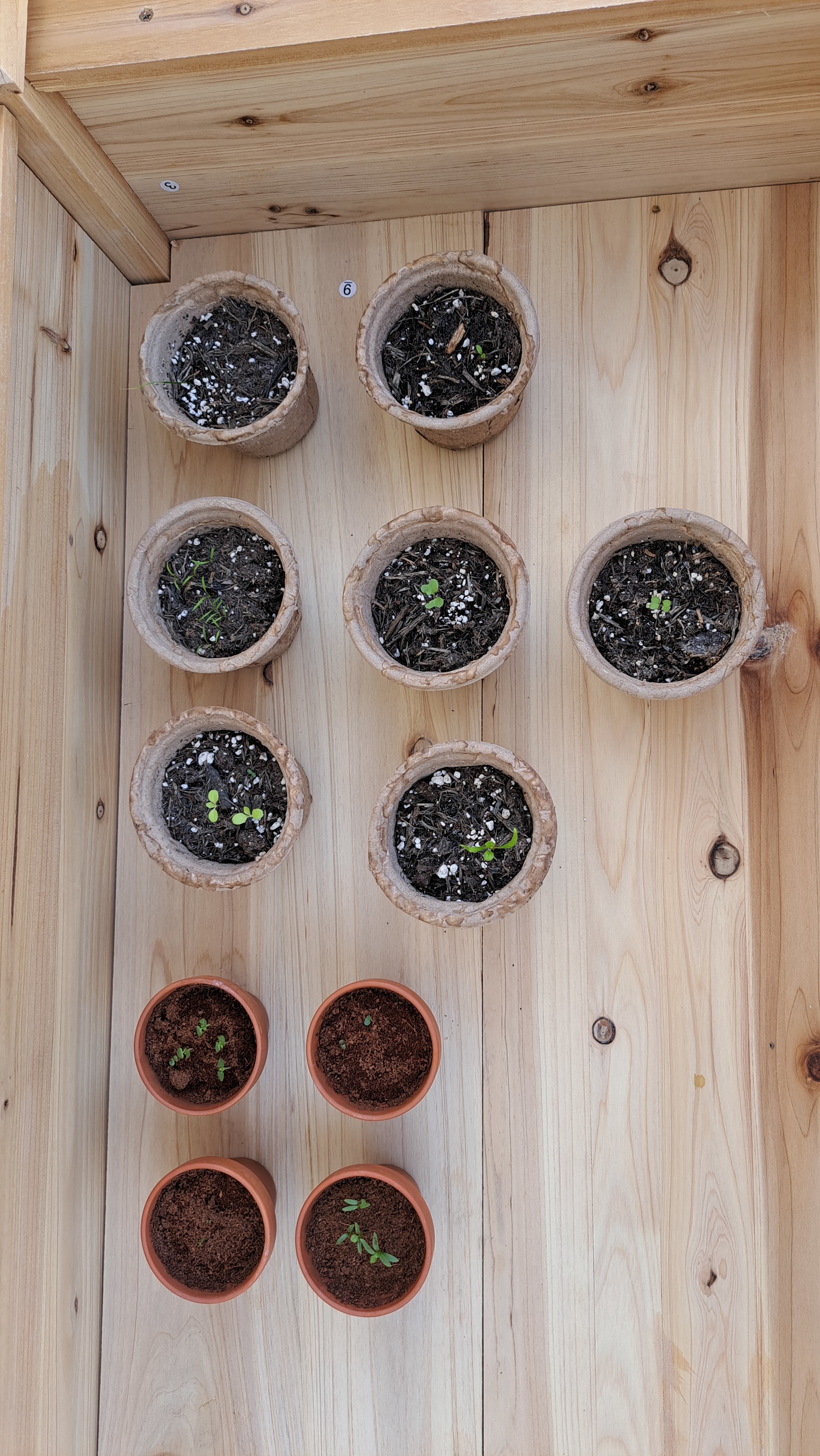 Despite being all-in regarding the concept behind holistic farming practices and naming ourselves The Wolffstead, we are no more than armchair agricultural philosophers with no real experience growing anything. Of course, opining about the way food production and distribution should be doesn't really make one a philosopher but it makes me feel slightly more erudite if I put it that way. The bottom line is that we knew we had to get our hands dirty. We needed to figure out what type of soil to get, what plants to get, and to see what it takes to grow them. So, of course, I left it in my wife's hands. She started in spring by planting seeds – mostly herbs – in their little containers and kept them inside soaking up the sun several hours a day safe from frost and behind the safety of windows. Weeks later they were all showing life but probably (it seems to us now) not as robustly as they probably should have. Eventually we got them planted in a small cedar garden box and hanging planters on our porch deck (that my wife tends) with the addition of other plants bought from Walmart and/or Menards, but most of them seem to be growing anemically.
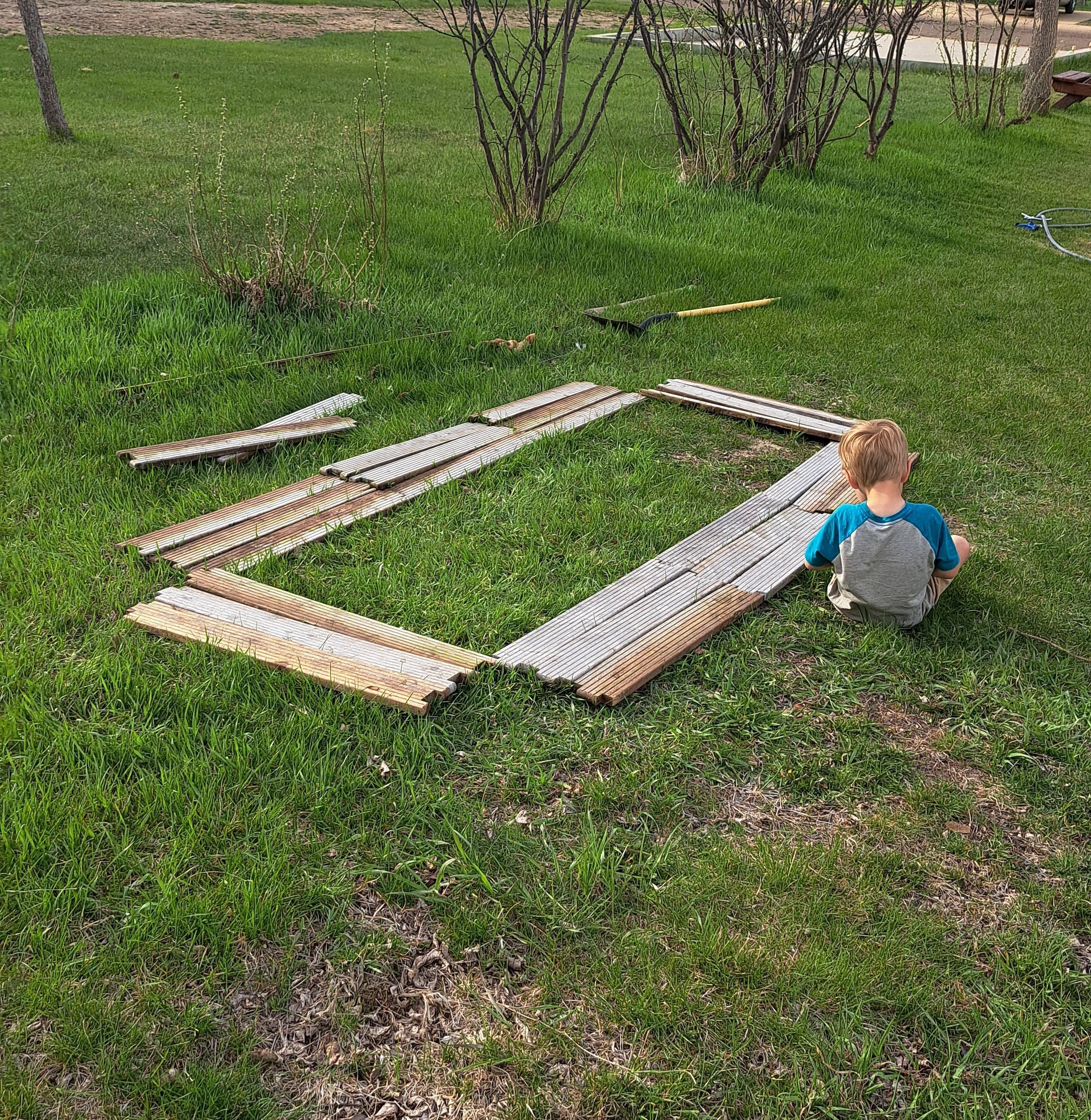 In addition to what we are growing on our deck, I acquired used interlocking 4”x32” cedar sections (later discovered at Menards and made by Redy-Garden) to make my roughly 3'w x 8'L x 12'h garden box. I would have preferred to have just staked them directly to the ground but was concerned about the grass, thinking that it should be removed first so that the roots of the garden plants wouldn't run interference with the grass and would be able to penetrate the underlying soil...or dirt is probably more accurate...more easily. I don't know if that's right or not but it makes sense to me. Therefore, I dug out the rectangular section about about four inches down and
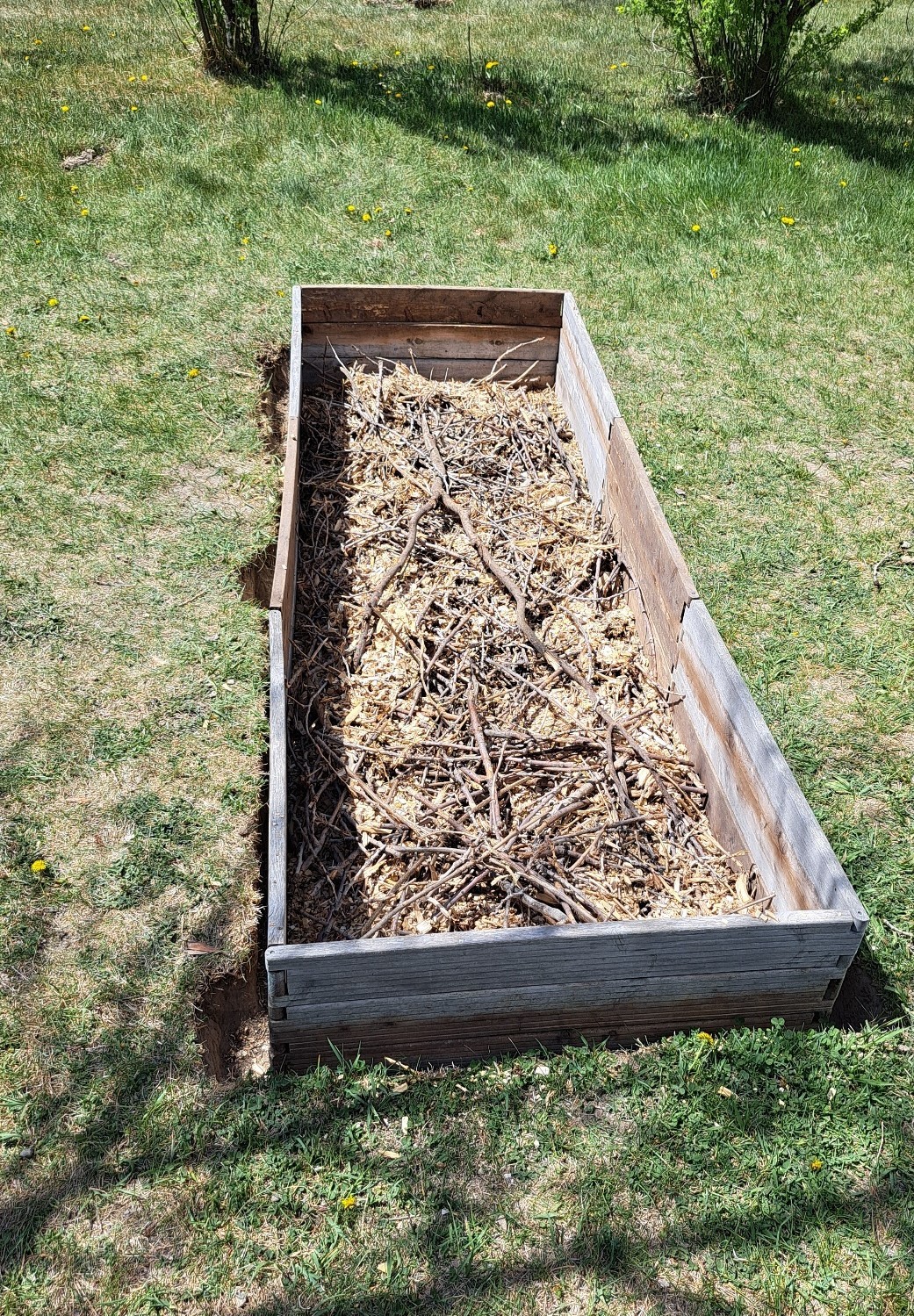 placed the cedar box in it. I then covered the bottom quarter or third with small branches and twigs, dumped in relatively clean wood chips produced from the earlier chipping of tree branches, added dirt/soil, and topped the whole thing with two bags of organic garden soil. Unfortunately adding the garden soil was not initially on my mind as I thought the readily available “soil” that I had easy access to was sufficient, so I left little space for adding store-bought organic garden bed soil and did not get much mixed in.
As of now, the dill and basil we are picking from the plants but the vegetables seem a long way from producing anything. Maybe this is okay as of this writing (June 26, '26) and maybe not, but we recognize that what is most valuable at this time is the process. We have long wanted to get our children involved in gardening and in a homesteading mentality and way of life. Last night for really the first time I recognized this was happening when my four and six-year-olds were following me around with their little garden cans watering the plants in the garden bed and asking questions. The oldest in particular peppers me with questions like “Is this enough water, dad?” and imitates me in putting my hand below the surface of the soil to feel how moist it is before watering.
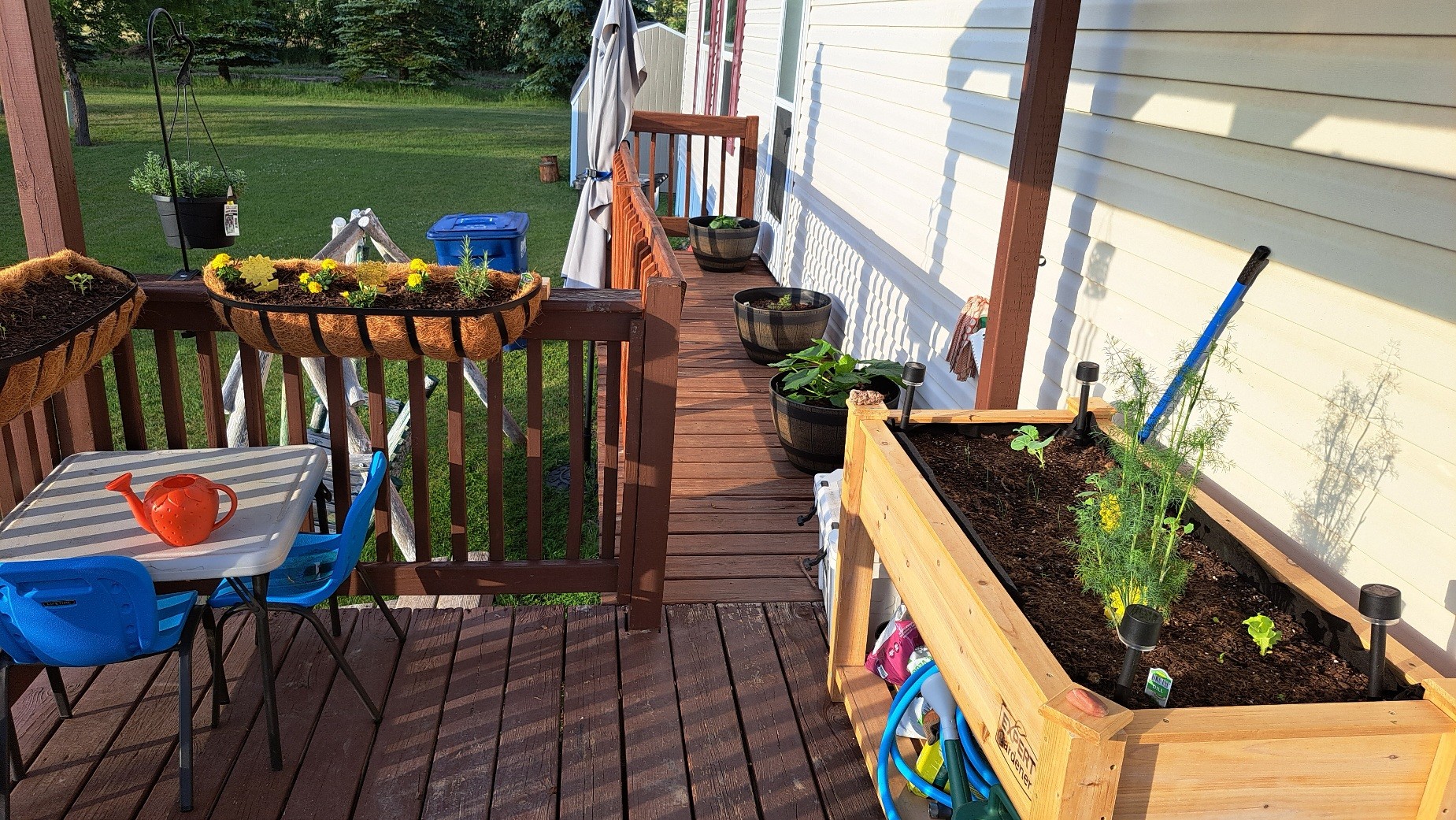 This foray into growing as well as all the podcasts I have been listening to for the last year-and-a-half on regenerative farming has really has got me thinking about soil. I don't trust any of it that we are growing in. The ground under my feet has grass growing on it but seems dead when digging below the surface. The so-called soil I have access to at work has ants in it (which I transferred to my new garden bed) and who knows how much glyphosphate residue since the area is sprayed with Round-Up to keep the weeds in check. I'm even cynical about the commercial organic bags of soil we bought since organics have (years ago) been co-opted by the big money people and other opportunists so who knows how much oversight there really is, particularly when getting the products from outside the U.S. The best answer is to create one's own soil through natural processes and the regenerative folks (in particular) seem to know how to do it. That's the only way to be certain of the nature and quality of inputs into the land. Although this makes sense for farmers but probably not home gardeners this is where it becomes important to have a relationship with local regenerative farmers where you could potentially get some of that soil. Again, if your not actually doing it you can't be 100% sure of anything but we can't do it all and we need to build trusting relationships.
So, to summarize, we are starting off well for the fact that we are starting off. This attempt at gardening highlights our ignorance, is not well planned (certainly not on my end), and probably will not be overly successful, but it's got the wheels turning. And as we all know if you don't start a race you can't finish it. Unfortunately, the eggplant and snap peas are just casualties of the experience.
Latest Posts
Bless The Lord...
As I sat in the church pew with the boys this past Sunday, September 13, I actually tried to join the refrain “The Lord...Read more
Clueless in Gardenland 2
It is now almost mid-September and all the plants are dead or nearly so. There has been no frost, so that is not responsible....Read more
The Deacon
It had been around six months since we had last attended liturgy at our former Byzantine Catholic parish. We made a conscience decision to...Read more

- 1 of 6
- ›